
For Harley Davidson riders, where bikes are often heavier and built for longer journeys, maintaining the right tire pressure is critical for both comfort and safety. This means that a Harley Davidson tire pressure chart is an invaluable tool, guiding you to the ideal pressure for different Harley models in various conditions. This routine maintenance step is a simple yet crucial aspect that contributes greatly to your Harley’s quality and longevity. Keep your tire pressure in check, and you’ll enjoy the road with confidence and ease.
Harley Davidson Tire Pressure Basics
Proper tire pressure is crucial to your Harley Davidson’s performance and safety. Maintaining the right PSI ensures optimal grip, traction, and stability that can contribute to your motorcycle’s fuel efficiency and overall handling.
Basics of Tire Pressure
Tire pressure is measured in pounds per square inch (PSI), and maintaining the correct air pressure is fundamental for your ride. Proper tire pressure for most Harley Davidson motorcycles is commonly around 36 PSI for the front tire and 40 PSI for the rear. However, these values can vary based on specific models and tire sizes, so it’s essential to check your owner’s manual for precise figures.
Role of Temperature
Temperature significantly impacts tire pressure as air expands when heated and contracts when cooled. In summer, tire pressure can increase naturally due to higher temperatures. Conversely, cooler conditions may lead to a decrease in pressure. It’s vital to adjust the tire pressure to adapt to these changes to maintain the recommended PSI.
Tire Pressure and Motorcycle Performance
The right tire pressure affects your Harley’s performance in several ways. Adequate pressure ensures better traction and grip, especially in various riding conditions. It also affects fuel efficiency by reducing rolling resistance, and it contributes to stability and handling dynamics, which are essential for a comfortable riding experience.
Harley Davidson Model-Specific Pressures
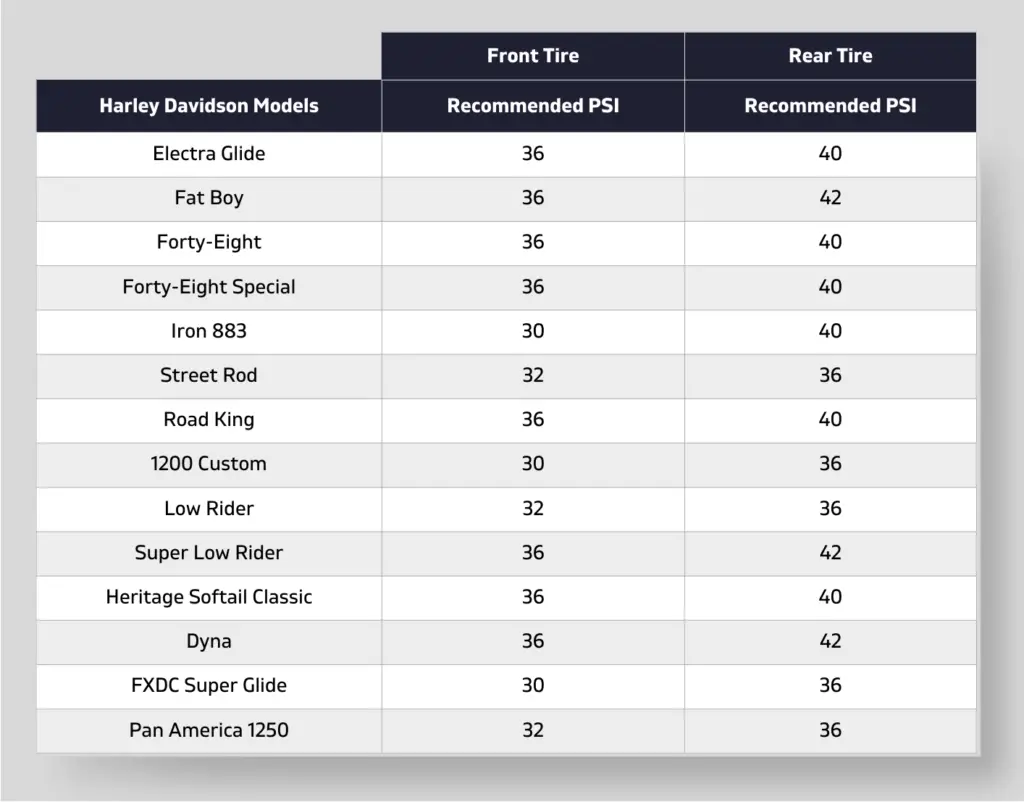
Reading the Tire Pressure Chart
The tire pressure chart is a valuable tool that guides you in inflating your tires correctly, whether it’s for the front tire, rear tire, or adjusting for different riding conditions.
Interpreting Chart Data
To correctly interpret the Harley Davidson tire pressure chart, look for your specific motorcycle model to find the recommended pressure. The chart lists the optimal front tire pressure and rear tire pressure in Pounds per Square Inch (PSI). Typically, the chart showcases a range of pressures; it’s vital to stay within these limits to maintain proper handling and tire longevity.
Finding Your Model
To find your model on the tire pressure chart, you’ll need the exact name or designation of your Harley Davidson motorcycle. Align this with the chart’s listings, which may include models from Softail to Electra Glide or Fat Boy.
Adjustments for Riding Conditions
Your tire pressure should be adjusted based on the riding conditions:
- Highway Riding: Increase both rear and front tire pressures by approximately 2 PSI above the recommended pressure to handle higher speeds and loads when riding on highways, but never exceed the maximum PSI.
- Summer: In hot weather, tires can expand, increasing pressure. Monitor the pressure frequently and adjust if it exceeds the maximum PSI due to heat.
- Mountains: If you’re heading into the mountains, consider the change in altitude and temperature as they may affect tire pressure, and be prepared to make necessary adjustments.
Remember, always refer to the Harley Davidson tire pressure chart for your specific model and follow manufacturer recommendations for your safety and the motorcycle’s performance.
Remember, tire pressure isn’t a ‘set and forget’ matter; regularly check to ensure that tire pressure varies as little as possible from the recommended levels for your motorcycle’s optimal performance.
Tools and Techniques For Proper Tire Pressure
Maintaining the correct tire pressure on your Harley Davidson is essential for a smooth ride and longevity of your tires. To keep your tires in top shape, you need the right tools and techniques for checking and adjusting the pressure.
Selecting a Tire Pressure Gauge
When selecting a tire pressure gauge, always choose one that is reliable and provides accurate readings. There are digital, dial, and stick gauges available. A high-quality gauge will ensure you read the correct PSI. Make sure it is compatible with the valve stem on your motorcycle’s tires.
Below is a high quality dial gauge made by Jaco. The long lasting analog gauge glows in the dark, is built to rugged ANSI standard, and has a built-in bleeder valve to reduce pressure in over inflated tires. In addition to the analog gauge shown below, Jaco also produces a more accurate digital tire pressure gauge.

How to Check Pressure Correctly
To get the most accurate readings, check your tire pressure when the tires are cold, preferably after the bike has been parked for a few hours. Remove the cap, press the gauge evenly onto the stem, and read the pressure. Refer to your owner’s manual to know the recommended psi for your specific tire size.
Adjusting Tire Pressure
If your tires need more air, fill them slowly and check the pressure as you go. When the pressure exceeds the required PSI, release some air by gently pressing the center pin in the valve stem. Once you’ve reached the recommended psi, re-install the cap.
Need help with the basics? See our guide on motorcycle tire pressure fundamentals.
General Recommended Tire Maintenance Tips
To ensure a smooth ride and extend the longevity of your Harley Davidson tires, regular maintenance is key. Following manufacturer’s recommendations and performing routine checks can significantly reduce the chance of wear, punctures, and blowouts.
Regular Checks
Frequency: It’s essential to check your motorcycle tire pressure regularly. For a memorable and secure long ride, make it a habit to inspect your tire pressure at least once a week or before any major trip. Keep in mind that weather conditions and load could necessitate slight adjustments within the safety margins.
Understanding Tire Wear
Assess your tires for tread depth and wear patterns.
- Tread: Essential for water displacement and grip. A simple penny test can help determine if it’s time to replace your tires.
- Uneven Wear: Can indicate issues with tire balance, alignment, or suspension. Addressing uneven wear early prevents further complications.
Avoiding Common Issues
To dodge common tire-related issues:
- Over-Inflation: Can lead to a less forgiving ride and accelerated middle tread wear.
- Under-Inflation: Increases the risk of tire blowout and uneven tread wear.
Notes on Tire Safety and Efficiency
Your Harley Davidson’s tire pressure is more than just a number on a gauge. It’s a crucial factor that influences your safety on the road and your bike’s fuel economy. Let’s explore how maintaining the ideal tire pressure ensures safety and maximizes fuel efficiency.
The Impact of Tire Pressure on Safety
Getting your tire pressure right is vital for your safety. If your tires are under-inflated, you’re at a greater risk of tire failure, especially on the highway where high speeds put more stress on them. Conversely, over-inflating your tires can diminish your road grip, particularly on wet or slick surfaces. Your braking efficiency relies heavily on adequate tire pressure, as it directly affects the tire’s contact with the road. For optimal safety, you should maintain the pressure within the recommended range, typically between 36 to 40 psi.
Maximizing Fuel Economy
Fuel efficiency isn’t just about saving money; it’s about making every ride smoother and more sustainable. Your Harley Davidson’s fuel economy can dip if your tires aren’t inflated properly. Tires at the correct pressure reduce rolling resistance, which means your bike won’t have to burn as much fuel to move forward. On the other hand, under-inflated tires can lead to increased fuel consumption by as much as 5%. Ideal tire pressure ensures you’re not stopping for gas more than necessary, keeps your fuel economy optimal regardless of whether you’re cruising on highways or maneuvering through city streets.
FAQs About Harley Tire Pressure
When riding your Harley Davidson, ensuring the correct tire pressure is vital for optimal performance and safety. Below are some commonly asked questions that will help you maintain the right pressure for your motorcycle tires.
Why is my Harley’s recommended tire pressure different from the tire’s max PSI?
The “max PSI” on the tire’s sidewall is the maximum safe inflation under full load — not what you should ride with daily. Harley’s recommended PSI is tuned for the bike’s weight, balance, and suspension.
How often should I check my tire pressure?
At least once a week, and always before long rides. Even small drops in pressure can affect handling on heavy bikes like Harleys.
Can I run higher pressure for better fuel economy?
Overinflating can improve mileage slightly but reduces traction, comfort, and tire life. Always stick with Harley’s recommended range
Should front and rear tires have the same PSI?
Not usually. Rear tires carry more weight, especially with passengers or luggage, so they typically require higher pressure.
Final Thoughts
Keeping your Harley tires at the correct pressure is one of the easiest ways to boost safety, comfort, and performance. Use the chart above to find the right PSI for your model, and make checking tire pressure part of your weekly routine. For more background on why this matters, start with our motorcycle tire pressure basics guide.
And if you’re looking for the best tools to keep in your saddlebag, don’t miss our upcoming buyer’s guide to the best motorcycle tire pressure gauges.