
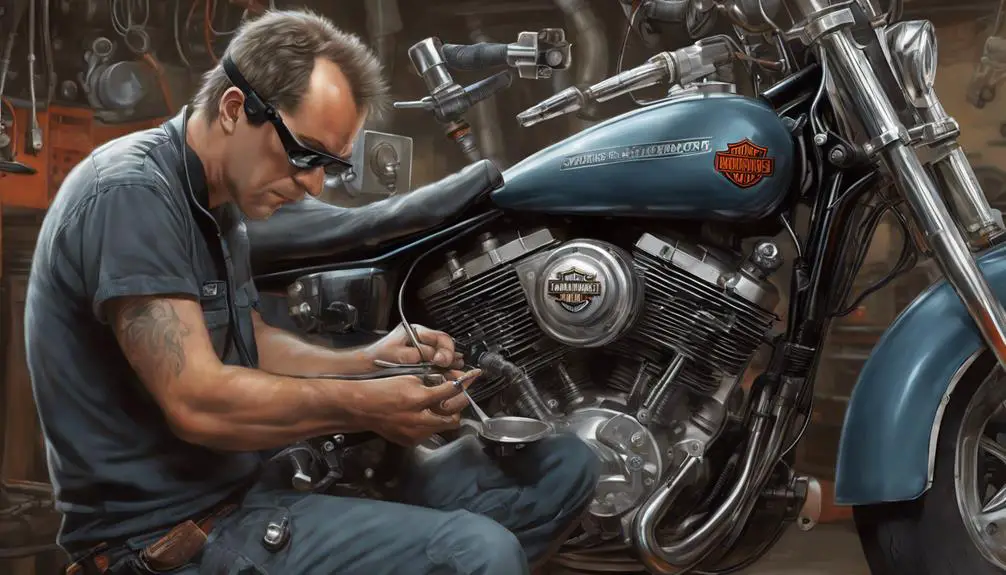
When it comes to identifying the source of that unsettling transmission noise in your Harley Davidson, visual inspection, listening attentively for peculiar sounds, and taking your bike for a spin are vital steps. But, are these three methods foolproof in pinpointing the exact issue causing the noise? Let’s explore each approach in detail to uncover the most effective way to diagnose and resolve transmission noise concerns in your prized Harley Davidson.
Key Takeaways
- Visually inspect components for damage, wear, and leaks.
- Listen for grinding, whining, clunking, or squealing noises.
- Test ride to observe gear shifting, power delivery, and vibrations.
- Check for loose components by moving shift linkage.
- Confirm all bolts are securely tightened to prevent issues.
Related read: Round ‘Em Up: What Year Harleys To Avoid? (Full Overview)
Visual Inspection
When diagnosing Harley Davidson transmission noise, start with a visual inspection of the components for any signs of damage or wear. Look closely at the gears, bearings, shafts, and any connecting parts. Check for any metal shavings, debris, or leaks that could indicate a problem. Liberating yourself from potential issues early on can save you time and money in the long run.
Inspect the transmission casing for cracks, dents, or other forms of damage. Confirm that all bolts and fasteners are securely tightened.
Freely move the shift linkage to see if there’s any unusual resistance or play. Embrace the opportunity to identify any areas that may need attention before they escalate into bigger issues.
Listening for Unusual Sounds
Listen attentively for any unusual sounds coming from your Harley Davidson transmission to pinpoint potential issues. Paying attention to the sounds your bike makes can help you identify problems early on and prevent further damage.
Here are some key points to keep in mind when listening for unusual sounds:
- Grinding noises: If you hear grinding sounds when shifting gears, it could indicate worn-out gears or a clutch that needs adjustment.
- Whining or humming: Whining or humming noises while riding could point to issues with the bearings or gears within the transmission.
- Clunking or banging: Loud clunking or banging noises when changing gears may suggest a problem with the transmission components or the clutch.
- Squealing: Squealing noises during acceleration might signal a slipping clutch that needs attention.
- Metallic rattling: Metallic rattling sounds could indicate loose components within the transmission system that require tightening or replacement.
Test Riding and Performance Observation
To further investigate potential issues with your Harley Davidson transmission, take your bike for a test ride and closely observe its performance. Feel the gears shifting as you accelerate and decelerate. Notice any grinding, clunking, or whining noises that may indicate transmission problems.
Pay attention to how smoothly the bike shifts between gears and if there are any delays or jerks in power delivery. During your test ride, focus on the overall performance of the transmission. Does it feel sluggish or unresponsive? Are there any vibrations or unusual sensations coming from the bike?
Keep in mind that even subtle changes in how your Harley Davidson operates can be important clues in diagnosing transmission issues.
Conclusion
To sum up, diagnosing Harley Davidson transmission noise requires a thorough visual inspection. Listening for unusual sounds and test riding for performance observation are also essential steps. By following these three methods, you can pinpoint the source of the noise and address any potential issues with your bike’s transmission.
Remember, a little maintenance goes a long way in keeping your ride smooth and enjoyable.
– Latest Reads
- 5 Best Motorcycle Locks To Keep Your Ride SecureMotorcycle theft happens fast and if you think it won’t happen to you, that’s exactly what thieves are counting on. Whether you park on the street, at work, or even in your own driveway, the right lock can be the difference between riding home and filing a police report. In this guide, we break down… Read more: 5 Best Motorcycle Locks To Keep Your Ride Secure
- Harley Code P1510: The Best Explanation Of Causes And FixesWhen it comes to Harley Davidson motorcycles, there’s a lot to understand regarding error codes. This article offers an in-depth look at Harley Code P1510. This code is common among Harley Davidson motorcycles, especially those with handlebar alterations. We’ll talk about when you should be concerned, what you should know, and what you can do… Read more: Harley Code P1510: The Best Explanation Of Causes And Fixes
- Harley Davidson Code C0077 – The Causes And How To FixHarley Davidson diagnostic code C0077 indicates a low tire pressure condition. Such a condition can lead to decreased fuel efficiency and increased tire wear. Neglecting this issue can also lead to safety hazards, such as tire blowouts and loss of control while riding. Read to understand what causes the code, how to fix it, and… Read more: Harley Davidson Code C0077 – The Causes And How To Fix
- The Complete Overview Of Harley Davidson Code P1632Harley Code P1632 is a common trouble code encountered by Harley Davidson riders and mechanics. The code refers to the “Odometer Learned Up” error, an issue related to the vehicle’s speedometer and odometer systems. So what does this mean for you, and should you be concerned? Well maybe, but what can you do about it?… Read more: The Complete Overview Of Harley Davidson Code P1632
- Harley Davidson Diagnostic Codes: The Most Complete GuideHarley Davidson motorcycles, with their robust engines and iconic design, represent the perfect blend of power and style. But even these legendary bikes can run into technical issues. Recognizing and resolving these challenges is key to maintaining their performance and longevity. One effective method for identifying problems is by scanning your bike for Harley Davidson… Read more: Harley Davidson Diagnostic Codes: The Most Complete Guide
- Harley Davidson Fat Boy Oil Capacity: The Ultimate GuideIf you’re a Harley Davidson Fat Boy owner, you should know that understanding the oil capacity of your bike is important for its best performance. It is actually one of the most important aspects of maintaining a Harley Davidson Fat Boy. Whether you ride daily or only on weekends, knowing the correct engine oil capacity… Read more: Harley Davidson Fat Boy Oil Capacity: The Ultimate Guide
- Harley Davidson Starter Relay Problems: The Ultimate GuideEncounter a delay when expecting the thundering rumble of your Harley Davidson? You’re not alone. A myriad of riders face the occasional hiccup with motorcycle starter issues, casting a shadow on the joy of the ride. In this critical guide, we plunge into the technical depths of Harley Davidson starter relay problems – dissecting symptoms,… Read more: Harley Davidson Starter Relay Problems: The Ultimate Guide